
Real Mycelium™: The Erinacine A Advantage
12 minute read

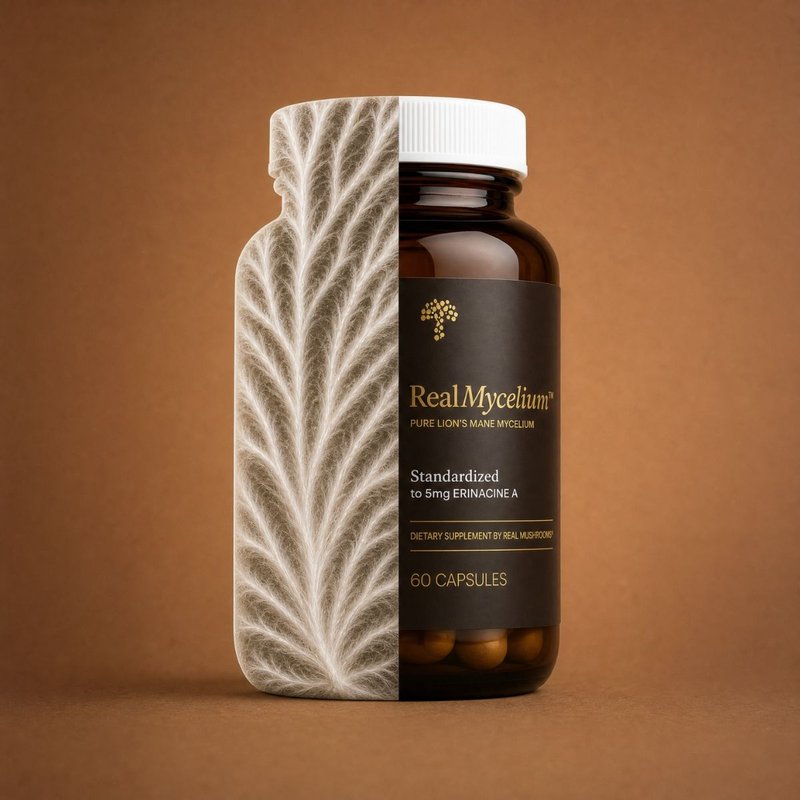
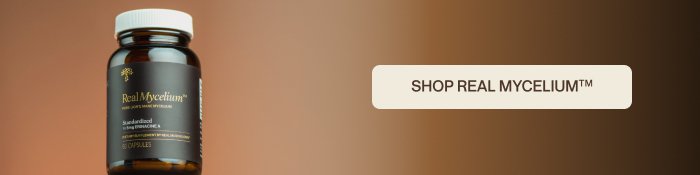
Meet our latest innovation in cognitive resilience: Real Mycelium™.
- Made from 100% pure freeze-dried Lion's Mane mycelium
- Produced via submerged liquid fermentation
- Standardized to a verified 5 mg of Erinacine A per serving
- No grain substrate or filler. Just pure mycelium
For those familiar with Lion's Mane supplements, you might recognize the unique makeup of this mushroom’s chemistry: hericenones, beta-glucans, and ergothioneine. Together, these compounds contribute to the broad range of biological activities that have made Lion's Mane mushroom (fruiting body) one of the most widely used supplements for cognitive health.
What you may not have had access to until now is a reliable, standardized source of the compound that is found exclusively in the mycelium: Erinacine A.
That's what Real Mycelium™ is designed to deliver.
In This Article:
- Erinacine A: The Mycelium-Specific Compound Worth Its Weight in Gold
- Real Mycelium™: Neuro-Adaptogen, Not Nootropic
- Why Erinacine A Matters Now: A New Frontier in Supplements
- The Clinical Evidence for Erinacine A
- What the Evidence Suggests
- Why Production Method Matters for Verified Erinacine A
- Why Real Mycelium™ Complements, Not Replaces, Lion’s Mane Extract
- How Real Mycelium™ Fits the Lion’s Mane Portfolio
- Who Real Mycelium™ Is Designed For
- Recommended Use & Expectations
- The Real Mushrooms® Standard, Applied to Mycelium
- FAQs
Erinacine A: The Mycelium-Specific Compound Worth Its Weight in Gold
Erinacine A is a unique, fat-soluble compound that has attracted considerable scientific interest because animal studies suggest it can cross the blood-brain barrier, allowing it to interact directly with tissues in the central nervous system [1,2].
Preclinical and emerging human research suggests Erinacine A may help influence neurotrophic pathways involving both nerve growth factor (NGF) and brain-derived neurotrophic factor (BDNF), two signaling systems associated with neuroplasticity, neuronal resilience, and healthy brain function.
Importantly, Erinacine A should be viewed as complementary to Lion's Mane mushroom extract, not a replacement. The mushroom (fruiting body) and the mycelium contain different bioactive compounds, each contributing to the broader story of Lion's Mane [3].
Real Mycelium™: Neuro-Adaptogen, Not Nootropic
Lion's Mane is often described as a nootropic, but that label may not accurately reflect what's happening here.
When most people think of nootropics, they think of ingredients that produce noticeable improvements in focus, concentration, or mental performance shortly after taking them.
Real Mycelium™ is different.
Rather than being associated with immediate cognitive effects, Erinacine A appears to influence the neurotrophic pathways that help the nervous system adapt, maintain function, and remain resilient over time.
For this reason, I prefer the term neuro-adaptogen. While no single term captures its full complexity, I find neuro-adaptogen a useful way to think about it. It better embodies the idea that Real Mycelium™ is not about pushing the brain harder today. It's about supporting the brain's ability to adapt and remain resilient over the long term.
Why Erinacine A Matters Now: A New Frontier in Supplements
Erinacine A is not a new discovery.
Researchers have known about this unique Lion's Mane mycelium compound for decades, and its neurotrophic properties have attracted scientific interest for many years [9].
However, only recently have scientists produced validated analytical methods that allow Erinacine A to be accurately measured and verified. Human clinical studies have begun to establish its safety profile and potential applications.
At the same time, advances in submerged liquid fermentation have finally made it possible to produce pure Lion's Mane mycelium with consistent and reproducible chemistry at a commercial scale.
Together, these developments have transformed Erinacine A from an intriguing research compound into a practical supplement ingredient. It can finally be standardized, studied, and verified.
Correcting the Mycelium Supplement Narrative
That pure mycelium supplements can only now, for the first time, be produced at scale with standardized, clinically relevant levels of Erinacine A highlights the glaring deficiencies of the existing mycelium products on the market.
More than 70% of the “mushroom” supplements bought in North America are produced using mycelium-fermented grain (MFG). The mycelium is grown on grain substrate that remains in the finished product and results in a diluted product with few, if any, of the clinically relevant fungal compounds.
These preparations have entirely different chemical profiles than both Lion's Mane mushroom extracts and pure mycelium preparations. As a result, they are not equivalent to the materials used in the published clinical studies on Erinacine A-enriched mycelium.

This distinction has important implications when interpreting the research. Mycelium-fermented grain (MFG) products may have a role within the broader supplement category, but they should not be assumed to provide the same chemistry, standardization, or clinical context as a pure mycelium product verified for Erinacine A content.
A "Lion's Mane mycelium" label has never been a guarantee of Erinacine A content. In most cases, it still isn't.
Real Mycelium™ is built around a different standard: verified Erinacine A content, measured using validated analytical methodology and documented on the certificate of analysis. If Erinacine A is the reason for choosing a mycelium product, it should be declared on the label and verified on a publicly available certificate of analysis.
The Clinical Evidence for Erinacine A
Human research on Erinacine A-enriched Lion's Mane mycelium is still emerging.
It's important to keep in mind that the evidence to date comes primarily from pilot studies and early-phase clinical trials rather than large, multi-center investigations. Nevertheless, the findings are encouraging, and a consistent pattern is emerging.
Importantly, several published human trials used material derived from the same liquid fermentation Lion's Mane mycelium source as Real Mycelium™.
The Li study used an extract prepared from this mycelium, while the Chan study used the whole freeze-dried mycelium [4,6]. As a result, these studies are not simply research on Erinacine A in general, but on preparations derived from the same source material used in Real Mycelium™.
Researchers have explored these pure mycelium preparations across several areas, including:
- Age-related cognitive challenges
- Healthy older adults
- Age-related auditory concerns
- Short-term gut-brain axis research in healthy adults
Despite focusing on different populations and endpoints, each study was designed around the same central hypothesis: that Erinacine A may influence biological processes associated with nervous system health and function.
The Clinical Studies: A Deeper Dive
(Click to expand)
The longest study to date was conducted by Li and colleagues (2020), who followed 41 participants for 49 weeks using an extract prepared from Erinacine A-enriched Lion's Mane mycelium produced through submerged liquid fermentation. 21 participants received three 350 mg capsules daily of the Lion's Mane mycelium extract (containing 5.25 mg of Erinacine A). The placebo group of 20 participants received identical-looking capsules filled with potato starch.
Participants receiving daily doses of Erinacine A showed significant improvements in selected measures of cognitive function and activities of daily living compared with placebo over the 49-week study period. Researchers also tracked several exploratory biomarkers related to healthy aging and nervous system function. Not every outcome achieved statistical significance between groups, but some did, and the overall findings provide a strong rationale for further investigation of Erinacine A in aging populations [4].
More recently, Bizjak and colleagues (2024) evaluated Erinacine A-enriched mycelium in healthy adults aged 55 to 75 years. Participants received approximately 3.44 mg of Erinacine A daily for 8 weeks. Despite the shorter duration and lower dose, the study reported improvements in selected measures of cognitive performance alongside a significant increase in BDNF [5].
A different perspective emerged from the work of Chan and colleagues (2022), who investigated age-related auditory function in older adults using whole freeze-dried Erinacine A-enriched Lion's Mane mycelium.
Participants received approximately 10 mg of Erinacine A daily for 8 months. Significant differences were observed in several measures of auditory function among participants aged 65 years and older, alongside changes in NGF. Importantly, this study highlighted the possibility that Erinacine A may influence multiple aspects of healthy nervous system aging, including hearing [6].
A different line of investigation comes from the work of Xie and colleagues (2021), who examined the short-term consumption of Lion's Mane mycelium in healthy adults. The study reported changes in gut microbiota composition alongside changes in selected serum biomarkers. While preliminary, these findings suggest a possible gut-brain axis pathway that warrants further investigation [7].

What the Evidence Suggests
Taken together, the current evidence suggests that Erinacine A-enriched mycelium may be particularly relevant in situations where cognitive resilience becomes a greater priority.
People who could benefit from Erinacine A supplementation include:
- Older adults who want nervous system support for healthy brain aging
- Adults with periods of increased cognitive demand
- Aging adults who want to maintain healthy hearing
The research remains early, and many questions remain unanswered, including the optimal dose, duration of use, and the populations most likely to benefit.
However, the consistency of the findings across multiple human studies, combined with a plausible biological mechanism and growing safety data, provides a compelling rationale for continued investigation.
Why Production Method Matters for Erinacine A
The production method determines what compounds are present in the finished product and whether those compounds can be meaningfully verified.
Real Mycelium™ is produced using submerged liquid fermentation, a cultivation method in which Lion's Mane mycelium is grown in a controlled liquid environment. Once the mycelium has reached maturity, it is separated from the liquid culture medium and freeze-dried to produce a pure mycelium.
The cultivation process can be optimized for Erinacine A production, resulting in a mycelium with consistent chemistry and verified Erinacine A content.
By contrast, mycelium-fermented grain (MFG) products retain the grain substrate in the finished material. As a result, the labeled weight reflects a combination of grain and fungal biomass, and without direct Erinacine A testing, there is no reliable way to determine how much Erinacine A is actually present.
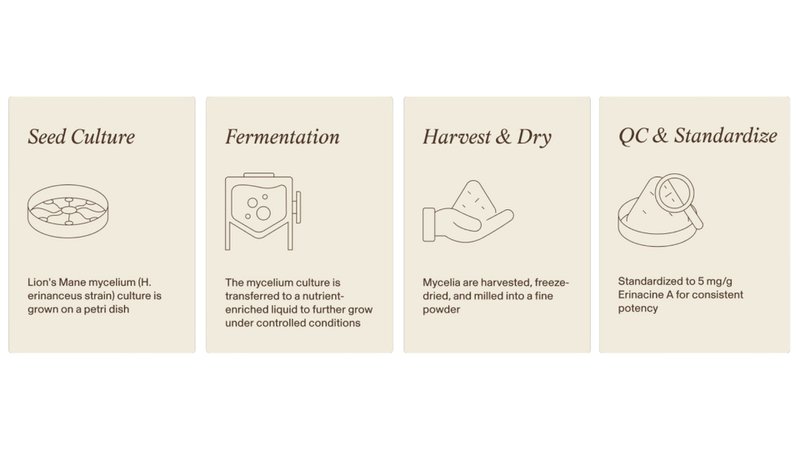
What submerged liquid fermentation makes possible:
- Pure mycelial biomass without grain dilution
- Consistent and reproducible chemistry across batches
- Verified Erinacine A content (5 mg per serving)
- Analytical traceability through validated testing methods
Ultimately, the value of a mycelium product is not determined by the word "mycelium" on the label. It is determined by the chemistry it delivers and the ability to verify that chemistry. Real Mycelium™ was designed around both.
Why Real Mycelium™ Complements, Not Replaces, Lion's Mane Extract
Real Mycelium™ was not developed to replace Lion's Mane mushroom extract.
Lion's Mane mushroom contains compounds such as hericenones, beta-glucans, and ergothioneine. It has been used traditionally for gut health and investigated in human studies examining cognitive function, mood, and healthy aging. It also sits within a broader body of epidemiological research linking regular mushroom consumption with healthy cognitive aging.
Real Mycelium™ provides a verified source of Erinacine A, a compound found exclusively in Lion's Mane mycelium and increasingly studied for its effects on neurotrophic pathways.
For practitioners and experienced mushroom users, the key point is that these preparations are not interchangeable. They serve different purposes and can be used together as part of a broader Lion's Mane strategy.
How Real Mycelium™ Fits the Lion's Mane Portfolio
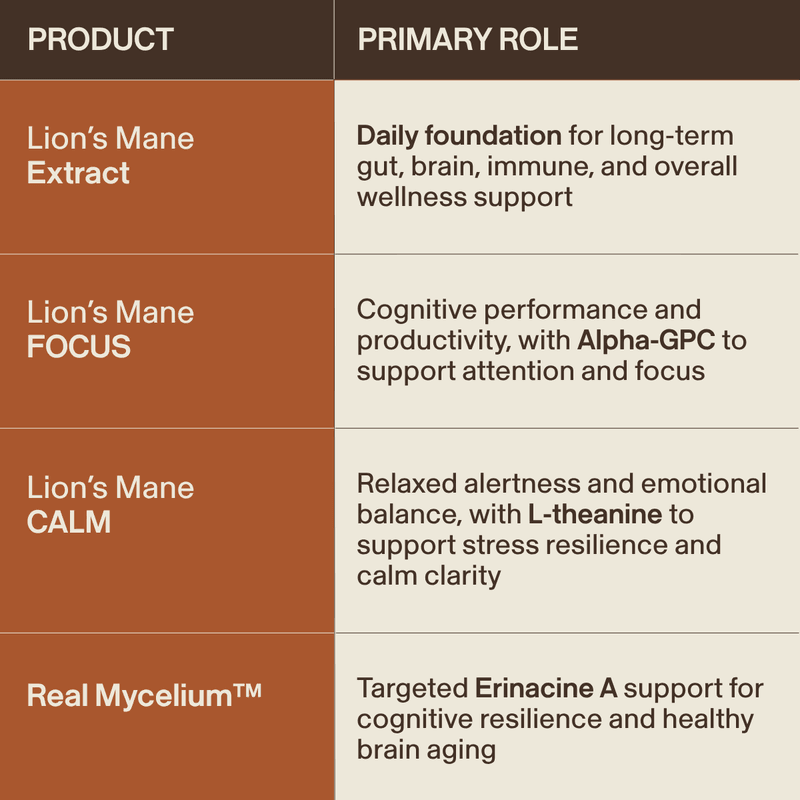
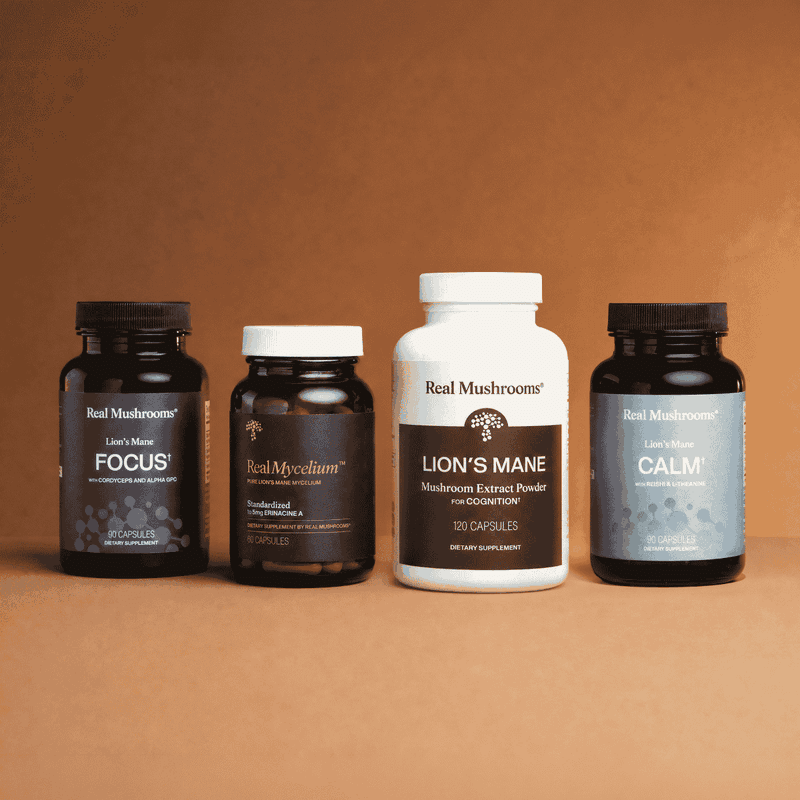
Real Mycelium™ is an additional tool, not a substitution.
Lion's Mane mushroom extract remains the daily foundation for most people. Real Mycelium™ provides a verified source of Erinacine A for those seeking a more targeted approach to cognitive resilience and healthy brain aging.
Who Real Mycelium™ Is Designed For
-
Adults aged 50+. While Real Mycelium™ may be appropriate at any age, its primary audience is adults seeking more targeted support for cognitive function, cognitive resilience, healthy brain aging, and auditory wellness.
-
People at any age, facing increased cognitive demands, including professionals, caregivers, parents, and others navigating sustained mental workloads.
- Practitioners seeking a standardized, analytically verified Erinacine A product, where the production method is documented, and quality evidence is traceable to the published clinical research.
Recommended Use & Expectations
The recommended serving of Real Mycelium™ is 2 capsules daily. They can be taken together or divided between morning and evening.
Clinical studies have used both divided-dose and once-daily protocols, so the most important factor is choosing an approach that you can maintain consistently.
Human studies evaluating Erinacine A-enriched Lion's Mane mycelium have measured outcomes over periods ranging from 8 weeks to 49 weeks. One study investigating auditory support in older adults used 2 capsules twice daily for 8 months.
Importantly, these timelines reflect the biology. Erinacine A appears to influence neurotrophic pathways involved in adaptation and resilience, processes that unfold gradually rather than overnight.
Real Mycelium™ is best viewed as a long-term strategy. Consistency matters more than perfection. Think in terms of months rather than days.
The Real Mushrooms® Standard, Applied to Mycelium
At Real Mushrooms®, we've always believed that mushroom supplements should be measured by the compounds that make them valuable.
For most functional mushrooms, that has meant focusing on meaningful levels of beta-glucans and verifying them through analytical testing. It's a simple principle: use high-quality ingredients, free of grain or fillers, measure and test for potency and purity, and be transparent about the results.
The same principle applies to Lion's Mane mycelium.
If Erinacine A is the reason for choosing a Lion's Mane mycelium product, then Erinacine A should be measured, verified, and disclosed. Until recently, that wasn't always possible. Today, validated analytical methods exist, and pure mycelium can finally be produced through grain-free liquid fermentation.
Real Mycelium™ brings those two developments together: pure Lion's Mane mycelium, produced without grain dilution and standardized to a verified level of Erinacine A.
This isn't a change in philosophy. It's the same quality-first approach Real Mushrooms® has always applied to mushrooms, now applied to mycelium.
FAQs
What is Erinacine A?
Erinacine A is a compound unique to Lion's Mane mycelium. Research suggests it can cross the blood-brain barrier and has been studied for its ability to support NGF and BDNF-related pathways in key brain regions, including the hippocampus and locus coeruleus [8].
Is Erinacine A in the Lion's Mane mushroom (fruiting body)?
No, Erinacine A is mycelium-specific. The mushroom (fruiting body) contains hericenones, beta-glucans, and ergothioneine, which are distinct bioactives with their own clinical relevance. Complementary, not interchangeable.
Is Real Mycelium™ a nootropic?
Not in the way the term is commonly used. Nootropics are typically associated with noticeable effects on focus, concentration, or mental performance over a short timeframe. Real Mycelium™ appears to work differently, supporting biological processes associated with adaptation and resilience within the nervous system over time. For this reason, we prefer the term neuro-adaptogen.
What makes Real Mycelium™ different from other mycelium products?
Most Lion's Mane mycelium is produced via MFG fermentation, where grain residue remains in the finished product. Currently, no MFG products disclose verified Erinacine A content. Real Mycelium™ uses grain-free submerged liquid fermentation and verifies 5 mg Erinacine A per serving on the certificate of analysis.
Has Real Mushrooms® changed its position on mycelium?
No. Real Mushrooms® has never been anti-mycelium. Our position has always been anti-grain dilution and pro-quality verification. Real Mycelium™ is the same standard applied to mycelium: pure, grain-free, standardized to Erinacine A, analytically verified.
Is Real Mycelium™ a replacement for Lion's Mane extract?
No. The two have distinct chemistry and different clinical strengths. Real Mycelium™ is designed to complement a full-spectrum fruiting body extract, not replace it.
How long before results can be expected?
Human trials have measured outcomes over 8 to 49 weeks. This is not a fast-acting product. Consistent daily use over a meaningful period is the appropriate expectation.
Is the 5 mg Erinacine A dose verified or estimated?
5 mg Erinacine is verified in every batch, confirmed by validated LC-MS/MS methodology and documented on the certificate of analysis. This is a meaningful distinction from products where Erinacine A content is inferred rather than measured.
Related Articles
- Lion’s Mane Mushroom Benefits: A Complete Supplement Guide
- Lion’s Mane for Dummies: A Friendly Guide to the Smart Mushroom
- Mycelium vs. Mycelium-Fermented Grain (MFG): What’s the Difference?
References
- Tsai M-C et al. (2021). Preclinical Bioavailability, Tissue Distribution, and Protein Binding Studies of Erinacine A, Hericium erinaceus Mycelia. Molecules, 26(15), 4510. https://doi.org/10.3390/molecules26154510
- Chen Y-Y et al. (2024). A pilot pharmacokinetic and metabolite identification study of Erinacine A in a single landrace pig model. Heliyon, 10, e37850. https://doi.org/10.1016/j.heliyon.2024.e37850
- Ma B-J et al. (2010). Hericenones and erinacines: stimulators of nerve growth factor (NGF) biosynthesis in Hericium erinaceus. Mycology, 1(2), 92–98. https://doi.org/10.1080/21501201003735556
- Li I-C et al. (2020). Prevention of Early Alzheimer's Disease by Erinacine A-Enriched Hericium erinaceus Mycelia Pilot Double-Blind Placebo-Controlled Study. Frontiers in Aging Neuroscience, 12, 155. https://doi.org/10.3389/fnagi.2020.00155
- Bizjak M et al. (2024). Effect of erinacine A-enriched Hericium erinaceus supplementation on cognition: A randomized double-blind placebo-controlled pilot study. Journal of Functional Foods, 115, 106120. https://doi.org/10.1016/j.jff.2024.106120
- Chan K-C et al. (2022). Effects of erinacine A-enriched Hericium erinaceus on elderly hearing-impaired patients: a double-blind, randomized, placebo-controlled study. Journal of Functional Foods, 97, 105220. https://doi.org/10.1016/j.jff.2022.105220
- Xie X-Q et al. (2021). Influence of short-term consumption of _Hericium erinaceus_ on serum biochemical markers and the gut microbiota: a pilot study. Nutrients. https://doi.org/10.3390/nu13031008
- Shimbo M et al. (2005). Erinacine A increases catecholamine and nerve growth factor content in the central nervous system of rats. Biomedical Research, 26(4), 145–148. | https://doi.org/10.1016/j.nutres.2005.06.001
- Kawagishi H et al. (1994). Erinacines A, B and C, strong stimulators of nerve growth factor (NGF)-synthesis, from the mycelia of Hericium erinaceum. Tetrahedron Letters, 35(10), 1569–1572 https://doi.org/10.1016/0040-4039(91)80039-9


