Lion's Mane Mushroom Benefits: A Complete Supplement Guide
14 minute read

Lion’s Mane mushroom benefits have gained widespread attention as this once traditional remedy moves into modern wellness, supported by a growing body of research on cognitive health, nerve function, and overall well-being.
Whether you're considering mushroom supplements for the first time or looking to optimize your current routine, understanding Lion’s Mane mushroom benefits, proper dosing, and quality markers separates effective use from wishful thinking.
In This Article
- Fast Isn’t the Only Kind of Effective
- Lion’s Mane Mushroom Benefits in 30 Seconds
- The Big Picture: Mushrooms and Long-Term Cognitive Health
- Putting One Gram in Context
- What Lion’s Mane May Be Doing: And Why Subtle Is Not a Flaw
- What Actually Makes Lion’s Mane Mushroom Benefits Work: The Constituents
- Mushroom, Mycelium, and What Material Actually Matters
- Why Lion’s Mane Comes In Different Forms
- The Gut-Brain Axis: The Hidden Layer
- Who Should Expect What
- Pairing Lion’s Mane with Brain-Supporting Nutrients
- Safety and Practical Use
- Final Takeaways: The Intelligent Way to Use Lion’s Mane
Fast Isn’t the Only Kind of Effective
You've probably heard someone say that Lion's Mane changed their mornings: sharper focus, cleaner thinking, more control. And now you're here, wondering whether Lion’s Mane benefits might show up the same for you.
First, let’s set expectations.
Lion's Mane is not a stimulant. It won’t feel like your first cup of coffee in the morning, and it's not going to replicate a brain-boosting nootropic stack. If that's the bar, this mushroom will likely disappoint you. But that is the wrong bar.
The most valuable support you can offer your nervous system is structural. Not immediate. Not dramatic. It builds. It compounds. It shows up weeks and months later in a steadiness you might not notice until it is no longer there.
What follows is a guide to what Lion's Mane mushroom benefits actually are, what the evidence says, and how to use it intelligently. No hype. Just biology.
Lion’s Mane Mushroom Benefits in 30 Seconds
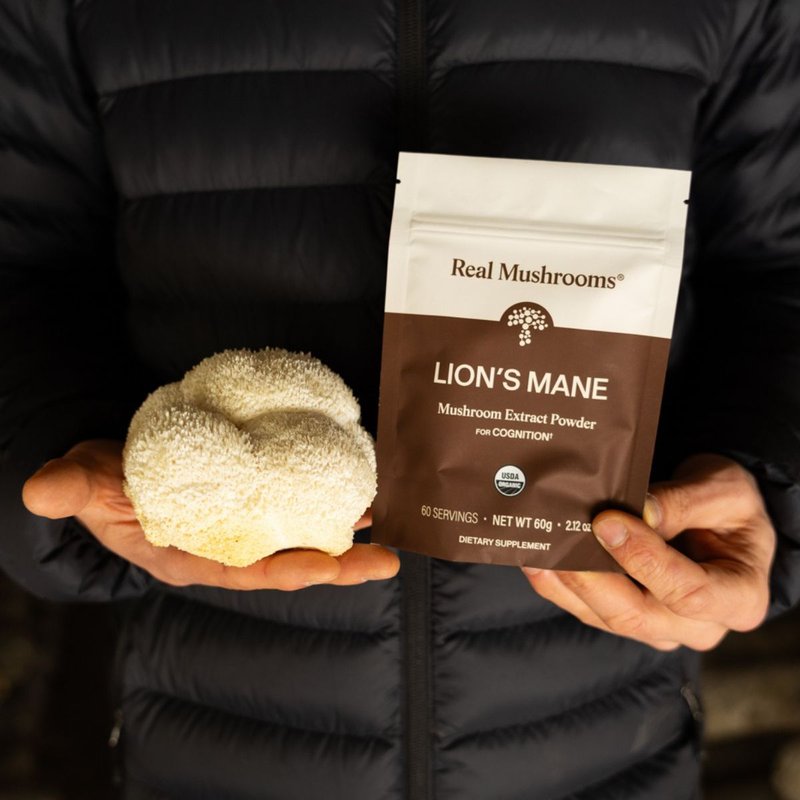
Lion's Mane mushroom benefits have drawn increasing attention as this unique culinary and functional mushroom continues to bridge traditional East Asian use with modern scientific research. Valued in both the kitchen and the clinic, it has attracted growing scientific interest for its potential to support the brain and nervous system.
What Lion’s Mane mushroom benefits may include:
- Supporting healthy cognitive function, mental clarity, and focus
- Promoting nervous system resilience over time
- Supporting gut health through prebiotic activity, with effects that reach well beyond the digestive tract
- Emotional steadiness, indirectly supported through nervous system and gut–brain pathways
What it is not:
- A stimulant
- A fast-acting nootropic
- A substitute for sleep, nutrition, or movement
- A product that works without consistent daily use
How to Run a Fair Self-Test
If you want to know whether Lion's Mane mushroom benefits are doing anything for you personally, the most common mistake is starting without a baseline.
Before you begin, choose one specific thing to track. Not a vague sense of “wellness,” but something concrete: mental stamina during a certain part of your workday, the quality of your focus on a task that usually creates friction, or evening mental fatigue after a demanding day. One metric. Written down before you start.
Then take it regularly for at least four weeks. If you take it for three days, skip two, and decide it is “not working,” you have not tested the product; you have tested inconsistency.
At four weeks, revisit your original metric honestly. A week tells you very little. A month is a starting point. The fuller picture often emerges over several months of steady use.
The Big Picture: Mushrooms and Long-Term Cognitive Health

Let's start where the evidence is strongest: population data.
Across multiple large observational studies, regular mushroom consumption is consistently associated with healthier cognitive aging. Not in one region or one dataset but across populations and durations. The relationship is robust, and it holds even at modest dietary intake levels. What matters most is not the occasional extravagant serving, but the steady, unremarkable presence of mushrooms in the diet over time. [3]
Lion's Mane sits squarely and prominently within this broader mushroom story. It has attracted the most direct scientific attention for cognitive support of any culinary mushroom, but the population-level benefits appear to be a property of the mushroom category, not just one species. Keep that in mind as we go.
Putting One Gram in Context

If population research points to steady mushroom intake over time, the practical question becomes: how does a supplemental serving compare?
Fresh culinary mushrooms are mostly water, typically around 85 to 90 percent. When that water is removed during drying, what remains is a much smaller amount of solid material. In practical terms, one gram of dried mushroom extract powder represents roughly ten grams of fresh mushroom.
A typical one-gram daily serving, two capsules of Real Mushrooms® Lion’s Mane, corresponds to about seventy grams of fresh mushroom over the course of a week.
That places daily supplemental intake in the same general range as the levels associated with favorable cognitive aging patterns in large population studies.
On paper, one gram may look modest. In dietary terms, it reflects meaningful, regular intake.
For those who wish to align more closely with published human research, higher daily intakes have also been studied. In a double-blind, placebo-controlled trial [4], adults consumed 3.2 grams of whole dried Lion’s Mane mushroom daily for 16 weeks, with observed benefits in measures of cognitive function. Six capsules per day of a 1:1 mushroom (fruiting body) extract, equivalent to approximately three grams of dried mushroom, closely reflects the amount used in that research.
What Lion's Mane May Be Doing: And Why Subtle Is Not a Flaw
Several mechanisms appear to underpin Lion's Mane's effects on the nervous system.
Neurotrophic pathway support: supporting the processes involved in healthy nerve growth, maintenance, and long-term resilience.
Nervous system adaptability: supporting the capacity of neural tissue to adapt and maintain function under the ordinary pressures of occasional stress and healthy aging.
Neuroimmune modulation: influencing healthy immune activity within the nervous system, which plays an important role in cognitive health over time.
Gut–brain communication: acting as a prebiotic that shapes the gut microbial environment, with effects that extend beyond digestion. (More on this shortly.)
None of these mechanisms pushes the brain to perform harder or faster. Lion's Mane does not override biology; it supports the terrain that allows the nervous system to function well over time. That is why its effects, when noticed, tend to feel less like a spike and more like a steady baseline being raised.
In healthy younger adults under minimal cognitive strain, the effects may feel subtle. That is not a failure; it reflects the fact that structural support is rarely dramatic. By comparison, human clinical trials have shown the most consistent benefit in adults experiencing normal cognitive changes that come with aging.
Think of Lion’s Mane not as a stimulant, but as a brain nutrient.
What Actually Makes Lion's Mane Mushroom Benefits Work: The Constituents
Lion's Mane is not a single-compound supplement. Its effects appear to arise from multiple constituents working together as a system.
Beta-Glucans — The Structural Polysaccharides
These structural polysaccharides form part of the mushroom’s cell wall. They act as fermentable fibers in the gut and interact with the immune system, contributing to both gut–brain communication and immune modulation. They are central to the mechanism, but not the whole story.
Hericenones — The Mushroom Compounds
Found in the mushroom, these compounds have been shown in laboratory research to stimulate nerve growth factor (NGF), a protein involved in the maintenance of certain neurons.
Erinacines — The Mycelial Compounds
Produced in the mycelium rather than the mushroom, erinacines are structurally distinct from hericenones and have demonstrated the ability to cross the blood–brain barrier in preclinical research. Standardized mycelial extracts enriched for specific erinacines, particularly erinacine A, are an emerging area of clinical investigation.
It is important to distinguish between standardized pure mycelium and mycelium fermented grain. These are not the same material, either chemically or biologically, and the difference matters.
Ergothioneine — The Cellular Protector
Ergothioneine (ERGO) is a unique antioxidant found in mushrooms, and Lion’s Mane is a naturally rich source. ERGO is actively transported into human tissues, including the brain. It supports the body’s natural cellular protection systems and is being studied for its role in healthy aging. [2]
The System, Not the Molecule
No single compound explains Lion’s Mane mushroom benefits in full. Beta-glucans, hericenones, and ergothioneine function together within the whole-mushroom matrix. While individual constituents can be studied in isolation, the strongest and most consistent clinical evidence to date has come from whole mushroom material rather than isolated compounds. There is a reason for that.
Mushroom, Mycelium, and What Material Actually Matters
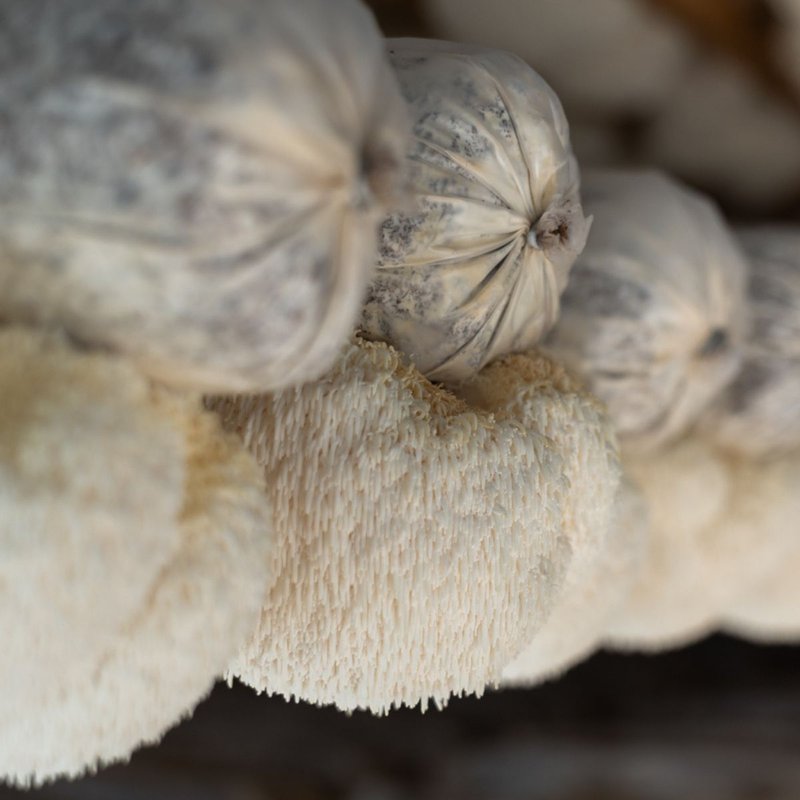
Understanding the compounds is one part of the story. Understanding the material used in a supplement is another.
A Quick Biology Primer
The fungus itself is the mycelium, a network of fine filaments that forms the organism’s main body. When conditions are right, it produces a reproductive structure. That structure is the mushroom, also known as the fruiting body.
The word “mushroom” refers to that structure only, not the entire organism. That distinction matters because branding does not always reflect what is listed in the supplement facts panel, and the supplement facts panel is what tells you what you are actually buying.
The Three Lions’ Mane Material Categories
Mushroom (fruiting body)
The traditional material. The form used in cooking and in East Asian medicinal tradition for centuries. The material studied in most long-term dietary and epidemiological research. It contains hericenones, beta-glucans, ergothioneine, chitin, and other compounds in the matrix in which they naturally occur. When clinical research cites Lion's Mane mushroom benefits, this is almost always the material in question.
Mycelium — standardized for erinacine A
Controlled cultivation of pure mycelium under specific conditions can yield meaningful concentrations of erinacine A. When a product is properly standardized and transparently labelled, it represents a distinct and emerging category of clinical trial evidence, particularly relevant in populations experiencing age-related cognitive challenges. A different tool, not an inferior one.
Mycelium fermented on grain (grain-based biomass)
This category is fundamentally different from both mushroom and pure mycelium.
In mycelium-fermented grain/biomass production, mycelium is grown on a grain substrate, and the entire block is dried and milled together. The final material, therefore, contains fungal biomass along with substantial grain-derived starch, aka alpha-glucan. It is chemically distinct from either mushroom or pure mycelium extracts.
This material has not been used traditionally, and it is not the form on which Lion’s Mane’s cognitive clinical research has been built.
Products of this type are sometimes marketed as “full spectrum.” In practice, that term often refers to the presence of mycelium along with small, immature mushroom structures formed during growth. It does not automatically mean equivalence to the mushroom and mycelium used in human cognitive studies.
When choosing Lion’s Mane for cognitive support, know exactly what material you are buying.
What to Look for on a Label
✓ Does the supplement facts panel clearly state whether the primary ingredient is mushroom, pure mycelium, or mycelium fermented grain?
✓ Is the beta-glucan content stated? "Polysaccharides" is a broader term that includes starch. Beta-glucans are the biologically relevant fraction.
✓ Is there third-party testing disclosed for species identity, purity, beta-glucan, and alpha levels?
✓ Does the company provide a Certificate of Analysis on request or make it publicly available on its website?
Companies that measure beta-glucans show you the number. If they do not show it, that itself is information worth having.
Why Lion’s Mane Comes in Different Forms
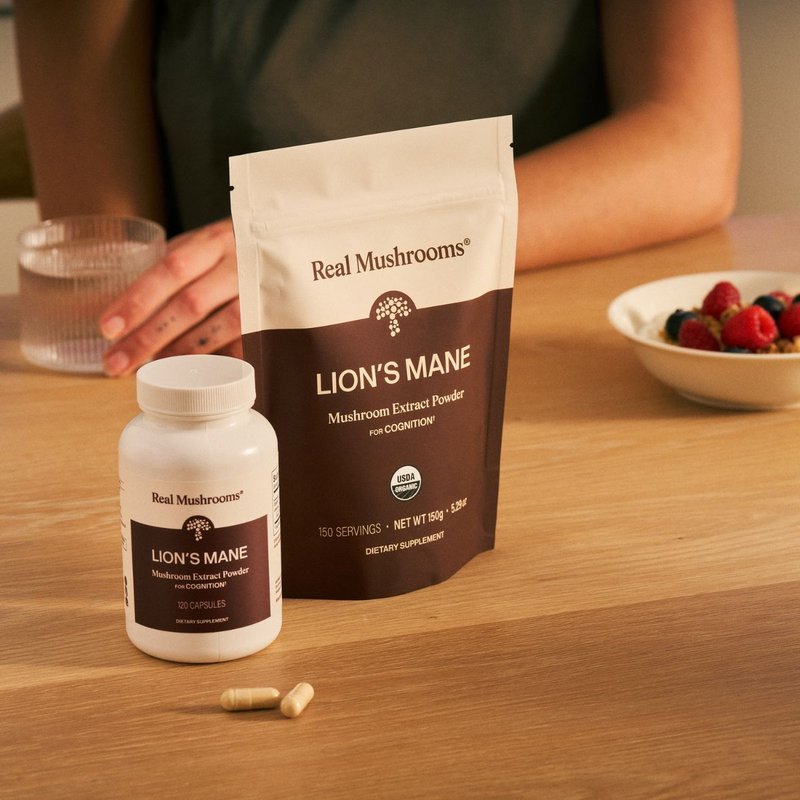
Lion’s Mane mushroom supplements are most commonly sold as hot-water extracts. On a label, “mushroom extract” usually means the mushroom has been prepared with water and heat to make its key compounds more accessible.
There are two practical variations you may encounter:
1:1 extracts
These retain the full matrix of soluble and insoluble mushroom components. They reflect traditional preparation methods and are well-suited for daily use.
Concentrated extracts
These provide more mushroom equivalent per gram, allowing meaningful amounts to fit into smaller capsule formats or to be combined with complementary nutrients such as choline or L-theanine.
Both forms can be appropriate. The distinction is not about better or worse, but about format, concentration, and intended use.
If you would like a deeper explanation of how mushroom extracts are produced and how to compare them, see my detailed guide on mushroom powders versus extracts.
The Gut–Brain Axis: The Hidden Layer
Lion’s Mane is often described as a “brain mushroom.” That is true, but incomplete.
The gut and brain are in constant communication. Signals travel through nerves, immune pathways, microbial metabolites, and circulating nutrients. This network is known as the gut–brain axis, and your gut microbes are active participants in it.
Lion’s Mane functions as a prebiotic. Its beta-glucans and fibrous structure feed gut microbes, which ferment them into short-chain fatty acids. These microbial by-products help maintain gut lining integrity, immune balance, and communication between the gut and nervous system.
A small pilot human study found that short-term Lion’s Mane supplementation altered gut microbial diversity and increased levels of certain beneficial species. The research is still early, but it reinforces what Lion’s Mane research has been suggesting for years: its effects are not confined to the brain alone. Like many medicinal mushrooms, its activity appears to unfold across interconnected systems, including the gut, immune network, and nervous system.
When population studies associate mushroom intake with cognitive health, the explanation is unlikely to be purely neurological. Gut, immune, metabolic, and vascular pathways are all part of the story.
If you would like a deeper dive into how mushrooms influence the gut ecosystem and whole-body health, see my detailed guide on mushrooms and gut health.
Who Should Expect What

Baseline Shapes Experience.
This is the part that rarely makes it into marketing copy, because the answer is not dramatic.
A healthy younger adult with strong cognitive performance may notice very little from Lion’s Mane in the short term. That is not a failure of the mushroom. Structural support is often subtle and not always something you feel directly.
Think of it like a savings account. You do not feel the effect of a single deposit. Over time, however, consistent deposits accumulate, and the interest compounds quietly in the background. Many forms of nutritional support work in the same way.
Individuals experiencing greater cognitive load, increased life demands, or the natural shifts that come with aging may be more likely to perceive changes over time. Human clinical research in middle-aged and older adults has explored this question, with results suggesting that consistent daily intake over several months may support aspects of cognitive function.
Lion’s Mane is not about intensity. It is about steady use. Intermittent intake tends to produce intermittent results. Consistency reflects how our bodies adapt. That is biology, not branding.
Pairing Lion’s Mane with Brain-Supporting Nutrients
Lion’s Mane mushroom benefits are best understood within the broader context of brain health. Lion’s Mane supports the structural and signaling environment of the nervous system, but no single nutrient works in isolation. Brain health depends on adequate raw materials, steady energy, and supportive lifestyle foundations.
The Foundations Still Matter
Omega-3 fats support normal brain structure. Sleep supports memory consolidation. Movement supports circulation. Stable blood sugar supports daily mental clarity.
Supplements can reinforce a well-supported system. They do not replace it.
Lion’s Mane + Choline for Focus
Choline is an essential nutrient involved in normal acetylcholine production and healthy cell membrane structure. Many people do not consume enough through diet alone.
Lion’s Mane supports neurotrophic pathways. Choline provides building blocks the nervous system uses for communication and structure. One supports the terrain; the other supplies key materials.
Food sources of choline include eggs, fish, organ meats, and legumes.
Lion’s Mane + L-Theanine for Calm
Lion’s Mane mushroom benefits are not about sedation but long-term nervous system support.
L-theanine, a naturally occurring amino acid found in green tea, is associated with relaxed attention and calm focus. Lion’s Mane works gradually. L-theanine tends to act more quickly. Together, they address different layers of cognitive support.
Safety and Practical Use
Lion's Mane has a well-established safety record across both traditional use and published human research. For most people, it is uncomplicated.
- Generally well tolerated at standard serving sizes
- If you have a sensitive digestive system, start with a lower amount and increase gradually
- If any discomfort occurs, stop use and consult a healthcare professional
- If pregnant, breastfeeding, or taking prescription medications, consult your healthcare professional before use
- If you have a known mushroom allergy, avoid use
Lion’s Mane is not intended as a short-term intervention. Daily use with occasional missed days is reasonable. Intermittent, on-again-off-again use is unlikely to reflect how it was studied or traditionally consumed.
Think months and years, not days and weeks.
Final Takeaways: The Intelligent Way to Use Lion's Mane
There is no shortage of supplements promising to sharpen your mind, supercharge your focus, and unlock your potential in thirty days or your money back.
This is not that.
Five things worth holding on to.
- It is food first. Lion’s Mane has been part of traditional diets for centuries. Its value rests on long-term use and a growing body of research, not a single dramatic mechanism.
- Consistency matters more than spikes. Daily use over months and years aligns more closely with how it has been studied and traditionally consumed.
- Dose should be meaningful, not token. Choose a product that provides transparent, tested mushroom content and use it regularly.
- Material and quality matter. Read the supplement facts panel. Look for tested beta-glucan content. Ask for transparency.
Support the terrain, not just the symptom. Pair Lion’s Mane with a nutrient-dense whole-food diet that includes choline-rich foods, adequate sleep, and regular movement. Supplements reinforce a system already being cared for.
Daily ritual. Decades of compounding benefit. Biology, not biohacking.
This article is for educational purposes only and is not intended to diagnose, treat, cure, or prevent any disease. Consult a qualified healthcare professional for personalized health advice.

Related Articles
- Lion’s Mane for Dummies: A Friendly Guide to the Smart Mushroom
- Determining the Right Lion’s Mane Dosage for Optimal Health
- Find the Best Lion’s Mane Supplement: The 4-Point Buying Guide
- Benefits of Mushroom Powders vs Mushroom Extract Powders: How to Choose
- Mushrooms for Gut Health: How Functional Fungi Can Help Digestion
References
- Cha, S., Bell, L., & Williams, C. M. (2024).The relationship between mushroom intake and cognitive performance: An epidemiological study in the European Investigation of Cancer—Norfolk cohort (EPIC-Norfolk). Nutrients, 16(3), 353. https://doi.org/10.3233/JAD-180959
- Cheah, I. K., & Halliwell, B. (2021). Ergothioneine, recent developments. Redox Biology, 42, 101868. https://doi.org/10.1016/j.redox.2021.101868
- Feng, L., Cheah, I. K., Ng, M. M. X., et al. (2019). Mushroom consumption and mild cognitive impairment: A community-based study in Singapore. Journal of Alzheimer’s Disease, 68(1), 197–203. https://doi.org/10.3233/JAD-180959
- Mori, K., Inatomi, S., Ouchi, K,.et al. (2009). Improving effects of the mushroom Yamabushitake (Hericium erinaceus) on mild cognitive impairment: A double-blind placebo-controlled clinical trial. Phytotherapy Research, 23(3), 367–372. https://doi.org/10.1002/ptr.2634
- Xie, X. Q., Geng, Y., Guan, Q, et al. (2021). Influence of short-term consumption of Hericium erinaceus on serum biochemical markers and the changes of the gut microbiota: A pilot study. Nutrients, 13(3), 1008.https://doi.org/10.3390/nu13031008


